
Thank you! Your submission has been received. We will get in touch with you soon.
Back to site
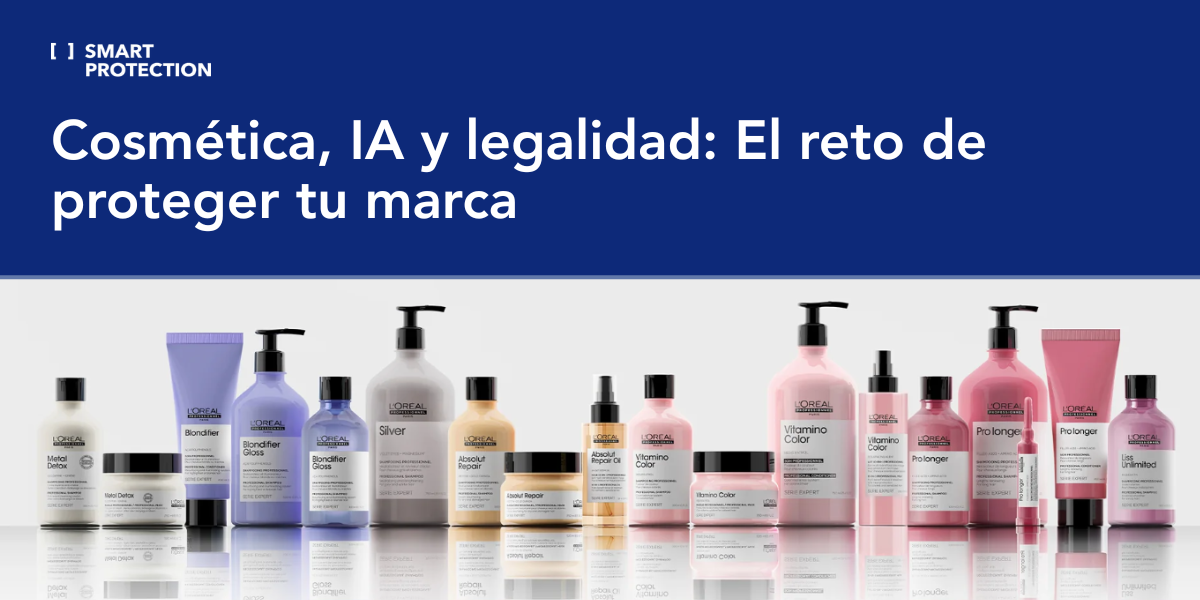
Discover the legal and operational challenges AI imposes on the cosmetics industry and how to protect your brand globally with actionable intelligence.
During the recent IV Fashion Law Congress (Congreso en Derecho de la Moda), industry-leading professionals gathered to analyze the vulnerabilities of the sector. In this article, we provide a summary and strategic analysis of the presentation delivered by Graciela Freire, Legal Counsel at L'Oréal, which marked a definitive turning point for the event. Her analysis of the intersection between artificial intelligence, marketing, and regulatory compliance left a clear conclusion. Technology accelerates advertising creation, but it also exponentially multiplies the legal and operational risks for global brands.
If you lead the protection of intangible assets or the compliance strategy within a multi-brand company, you face a high-friction scenario. The ability to generate an entire advertising campaign in seconds with a simple prompt seems like an undeniable advantage for marketing teams. However, from a brand protection perspective, this technical ease conceals a direct threat against commercial reputation and consumer trust.
The line between the real and the fictitious blurs rapidly. Understanding this phenomenon and applying global containment and enforcement strategies is fundamental to maintaining control over your digital ecosystem and reducing the operational workload of your team.
In the cosmetics industry, the concept of efficacy is everything. The consumer purchases a product based on a promise of verifiable results. Graciela Freire highlighted that the use of artificial intelligence to generate promotional images poses a critical legal and reputational risk. When an altered image, or one created entirely from scratch, projects a result that the physical product cannot achieve, the brand crosses the line into false advertising.
For businesses, this results in a severe problem. AI does not merely alter the aesthetics of a campaign; it compromises compliance with the European cosmetics product regulations. Furthermore, the rise of deepfakes adds a layer of technical complexity. The creation of ultra-realistic synthetic content using faces without consent not only violates image rights but also associates your brand with fraudulent practices and unauthorized listings on marketplaces that escape your direct control.
For brand protection managers, this translates into an overwhelming workload. Monitoring global channels in search of unauthorized campaigns requires total visibility and automated prioritization of threats, not simple manual reviews.
Another strategic pillar addressed during the conference was influencer marketing. Collaboration with content creators is the standard for positioning beauty products. Nevertheless, compliance with the advertising code of conduct remains an enormous operational challenge when you scale internationally.
Regulations demand that the advertising nature of any publication be clearly labeled. The true challenge does not lie in creating new regulations, but in controlling that all actors within the ecosystem operate under the same legal standards. When an affiliate promotes your products while ignoring these guidelines, the final consumer suffers the deception. But it is your company's name that assumes the reputational damage and the internal pressure from legal teams.
You need to guarantee a coherent application of your policies across all jurisdictions. This implies constantly auditing the platforms. The lack of alignment between marketing reach and regulatory compliance generates frictions that can only be resolved with objective data and actionable intelligence.
Digitization has democratized access to advertising, but it has also facilitated brand abuse. Today, any unauthorized distributor or counterfeiter can launch highly sophisticated, segmented campaigns. This lack of control generates an unprecedented volume of threats to the consumer and erodes brand loyalty.
For months, eCommerce reports might show an increase in traffic, but a drop in conversion or a spike in returns. This unsettling paradox is explained by the loss of trust. When a user acquires a cosmetic product through a deceptive ad and the result does not match the expectation generated by AI, the blame falls squarely on the original manufacturer.
The damage is direct. It translates into negative reviews and a dilution of the value of your intellectual property. Managing this volume of infringements requires reducing vendor fatigue and unifying enforcement efforts under a global, scalable strategy.
The pressure to capture attention in a saturated market pushes many distributors toward intrusive communication. Freire underlined the importance of maintaining balanced advertising that respects legality and avoids falling into harmful stereotypes.
When automated third-party tools generate content without supervision, they run the risk of perpetuating biases that clash head-on with corporate values. Protecting your brand also means protecting its visual and moral identity on a global scale. Ensuring that the messages circulating under your logo truly reflect your standards requires exhaustive multi-channel monitoring.
The conclusion of the presentation was emphatic. Faced with a complex digital landscape, manual intervention and fragmented processes are inefficient. Automated platforms represent the only viable solution to control the ecosystem and achieve effective global enforcement.
Transforming the noise of digital data into prioritized intelligence is the critical step for any brand protection leader. By implementing integrated monitoring systems, you can detect and analyze threats in real-time. This allows you to act on the most critical incidents before they escalate into legal or commercial crises.
The automation of these processes drastically reduces your team's workload. By integrating detection with effective legal actions across multiple platforms, you regain operational control. Technology provides you with the necessary evidence to execute precise actions, guaranteeing a safe environment for your consumers.
Managing the protection of your intellectual property against the challenges of artificial intelligence requires a strategic and reliable approach. If you are looking to streamline your enforcement operations, reduce manual burdens, and obtain global visibility over the misuse of your brand, at Smart Protection we help you convert alerts into concrete actions, protecting the value of your business intelligently and scalably.


