
Thank you! Your submission has been received. We will get in touch with you soon.
Back to site
.png)
Discover how AI scales brand impersonation. Digital risk mitigation strategies for CMOs and e-commerce directors.
Yesterday at Shoptalk Barcelona, one line stopped the room.
"You'll never be heard if you try to scream 100 different messages at your customer, but you can get very clever around screaming one message 100 different ways." — Marisa Poster , Co-Founder, PerfectTed
It was part of a sharp session on Marketing for a New Consumer Reality, featuring Aparna Sundaresh (Global CMO, De'Longhi Group ) and Marisa Poster, moderated by Brendan Witcher.
The conversation centered on storytelling, motivation, and brand consistency.
But sitting in that room, one thought kept growing louder.
Brands have never had more tools to stay consistent.
And bad actors have never had more tools to fake that consistency.
That's the tension worth unpacking.
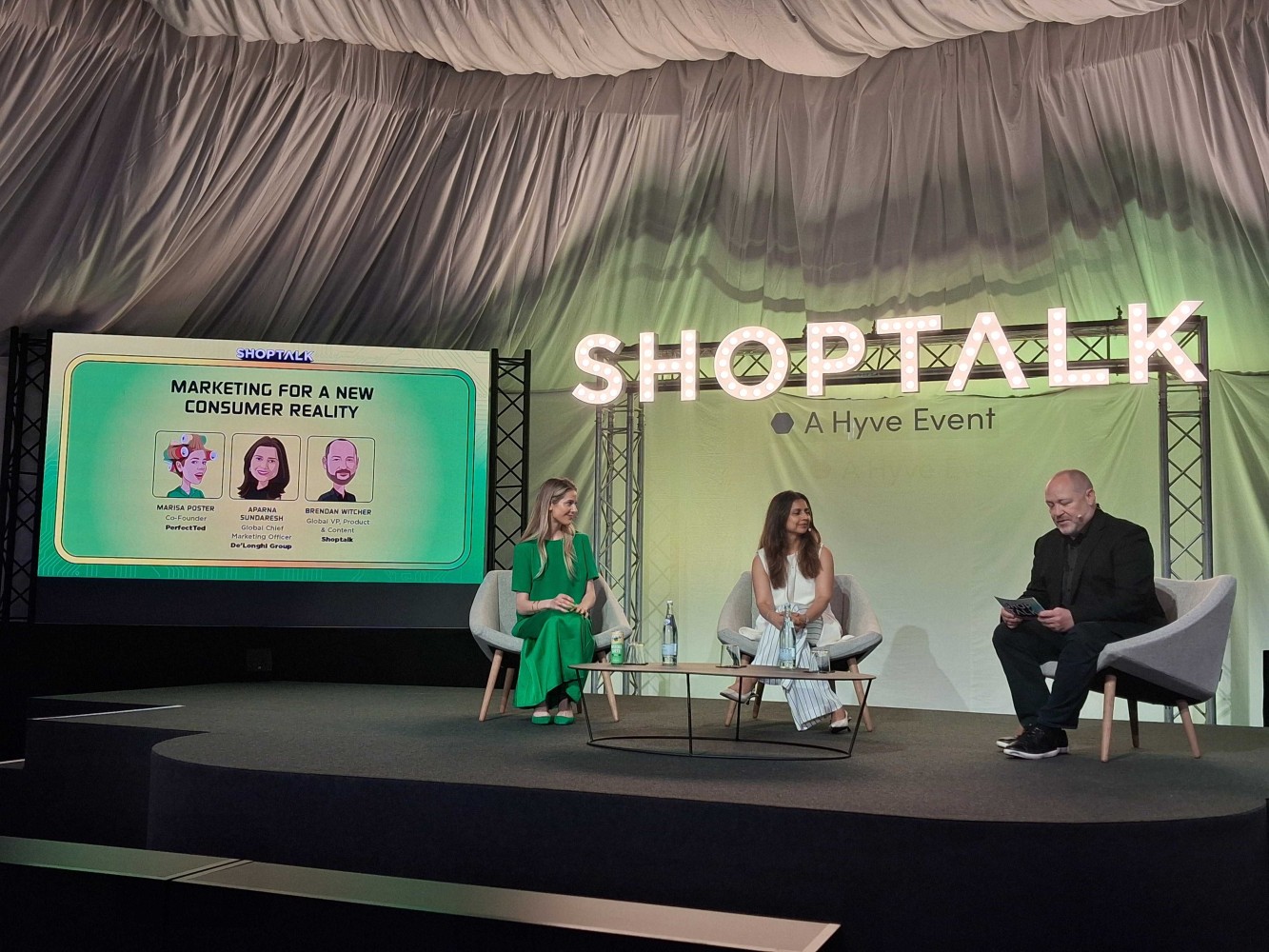
The discussion delivered real value for any brand or marketing leader. A few ideas stood out.
One message, expressed many ways. Consistency isn't repetition. It's discipline. Saying one thing clearly, across every channel, without diluting it into noise.
Storytelling is the differentiator. PerfectTed's third-ever hire was a videographer. Not a performance marketer. Not a data analyst. A storyteller. That choice says everything about where brand value now lives.
Ditch personas. Chase motivations. As Aparna put it: "Consumer personas can trip you up because you get caught up in definitions and stereotypes and bring your own biases to the table." Two very different people can share the same triggers and barriers.
AI handles consistency. Humans own distinctiveness. AI can keep your brand on-message across 50 channels. But clutter-breaking, thumb-stopping creative still requires human vision and taste.
That last point is where the conversation gets interesting.
Because if AI makes it easier for you to create on-brand content at scale, it makes it just as easy for someone else to do the same with your identity.
Takeaway: Consistency is now a growth asset. But you only control half of it.
Here's the uncomfortable part.
Most brand directors believe they control brand consistency.
And inside their owned ecosystem, they often do.
They control:
But consumers don't only experience the brand you publish.
They experience the brand that appears to be you.
And that version is multiplying fast.
Fake websites. Cloned storefronts. Fraudulent ads. Online impersonation. Counterfeit listings. Unauthorized sellers.
Each one tells a story about your brand.
Just not the one you approved.
Let's be direct about what's changed.
Creating a fake, believable brand experience used to require effort, skill, and time.
Now it requires a prompt.
AI fraud has lowered the cost of imitation to almost zero.
In practice, this means a bad actor can generate:
From a digital trust perspective, this is the real shift.
The session celebrated how easy it now is to create on-brand content with AI.
The flip side is that it's equally easy to create convincing off-brand experiences using your identity.
Same technology. Opposite intent.
Takeaway: The tools that scale your consistency also scale your impersonation.
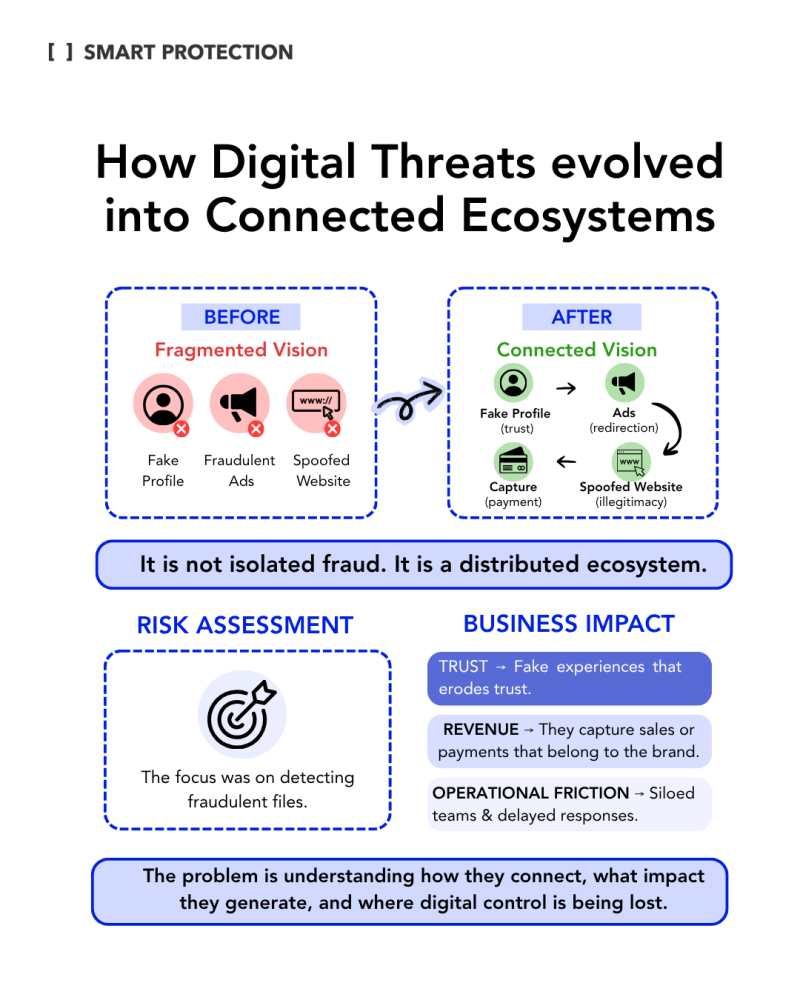
This is not a future problem. It's a visibility problem happening right now.
Most brand and marketing teams discover the parallel ecosystem too late.
Usually one of two ways:
By then, the damage is already done.
A consumer doesn't think, "This is a fake website operated by an unauthorized third party."
They think, "This brand let me down."
That's how consumer trust erodes. Quietly. Outside your dashboards. Inside experiences you never created.
And it doesn't stay contained to marketing.
The same threat lands differently across the business:
This is fragmented ownership of digital risk. Everyone touches part of the problem. No one owns the whole picture.
For years, brand consistency meant message discipline. One voice. One story. Many channels.
That definition is no longer enough.
Modern marketing now carries a second responsibility: protecting brand consistency across the full digital ecosystem, not just the owned one.
Because brand reputation is no longer shaped only by what you create.
It's shaped by every version of your brand that exists online, authorized or not.
This is the evolution from brand protection to digital trust protection.
The question is no longer "Is our message consistent?"
It's "Is our brand consistent everywhere a customer might encounter it?"
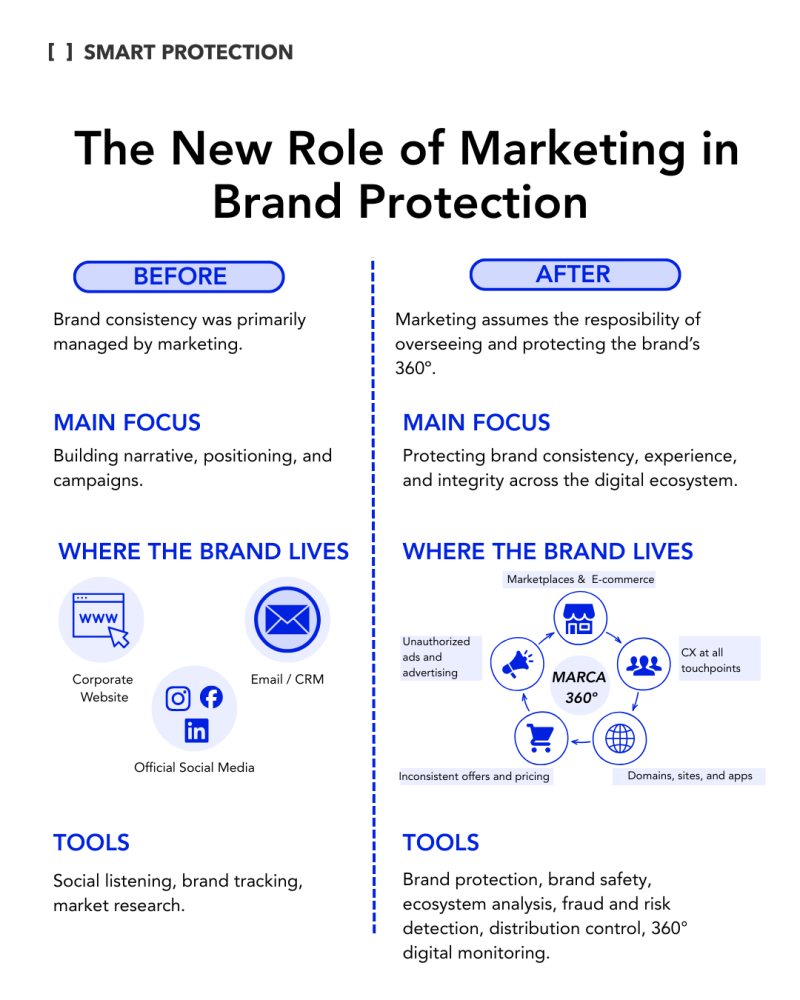
You don't need to become a security team. You need to extend how you define brand consistency.
Here's where to start.
1. Map your unofficial ecosystem. List where your brand could appear beyond owned channels: marketplaces, ads, social, search, domains. Assume you have blind spots.
2. Treat brand consistency as a 360° asset. Owned content is one layer. Cloned sites, fake ads, counterfeit products, and unauthorized sellers are another. Both shape perception.
3. Connect marketing to digital risk visibility. Trust erosion is a marketing problem long before it's a legal one. Make sure your team sees the threats, not just the complaints.
4. Prioritize by business impact, not volume. The goal isn't more alerts. It's understanding which fake experiences actually damage trust, revenue, and reputation.
5. Break the departmental silos. Brand, Ecommerce, Legal, and Customer Support are all seeing fragments of the same issue. Give them one shared view.
Takeaway: Message consistency is internal. Brand consistency is now external too.
The session was about storytelling, motivation, and saying one thing in a hundred clever ways.
That advice still holds.
But here's the extension we left the room thinking about:
If you tell one consistent story, and the market is flooded with a hundred convincing fakes of it, the customer can no longer tell which version is real.
That's not a creative problem.
That's a digital trust problem.
And it's becoming one of the most underestimated risks in brand building today.
Brand consistency isn't only about what you say anymore.
It's about protecting how your brand exists everywhere a customer might find it.
If you're a brand or marketing leader: how confident are you that the version of your brand customers see online is the one you actually built?
I'd genuinely like to hear how your team is thinking about this.
And if you're starting to map your brand's exposure across the wider digital ecosystem, it may be worth a short conversation with one of our digital risk experts to pressure-test where your blind spots are.
Talk with one of our brand digital risk experts: https://support.smartprotection.com/meetings/flint-smith?uuid=3fb754fc-270a-4c74-8480-29177d9f7766&utm_campaign=44864370-AGENDAMIENTO%20ORGANICO&utm_source=contenidoorganico
1. What is brand consistency in the context of digital risk? It's the alignment between how your brand presents itself and how it actually appears across every digital channel. Internally, you control message consistency. Externally, fake websites, online impersonation, and unauthorized sellers can break that consistency without your knowledge.
2. How does AI fraud affect brand reputation? AI lowers the cost of creating convincing fake experiences, from cloned sites to fraudulent ads. This means more believable impersonation at scale, which erodes consumer trust and damages brand reputation before teams detect it.
3. Why don't brand directors notice these threats sooner? Most monitoring focuses on owned channels. The parallel ecosystem of counterfeit products, fake websites, and unauthorized sellers usually surfaces only through customer complaints or accidental discovery, after the trust damage has begun.
4. Is brand protection a marketing or a legal responsibility? Both, and that's the challenge. Trust erosion is a marketing and reputation issue long before it becomes a legal one. Fragmented ownership across departments is why many threats go unaddressed.
5. What's the first step toward protecting digital trust? Gain visibility. Map where your brand can appear beyond owned channels, then prioritize threats by their real impact on consumer trust, revenue, and brand integrity, rather than reacting to volume.


