
Thank you! Your submission has been received. We will get in touch with you soon.
Back to site
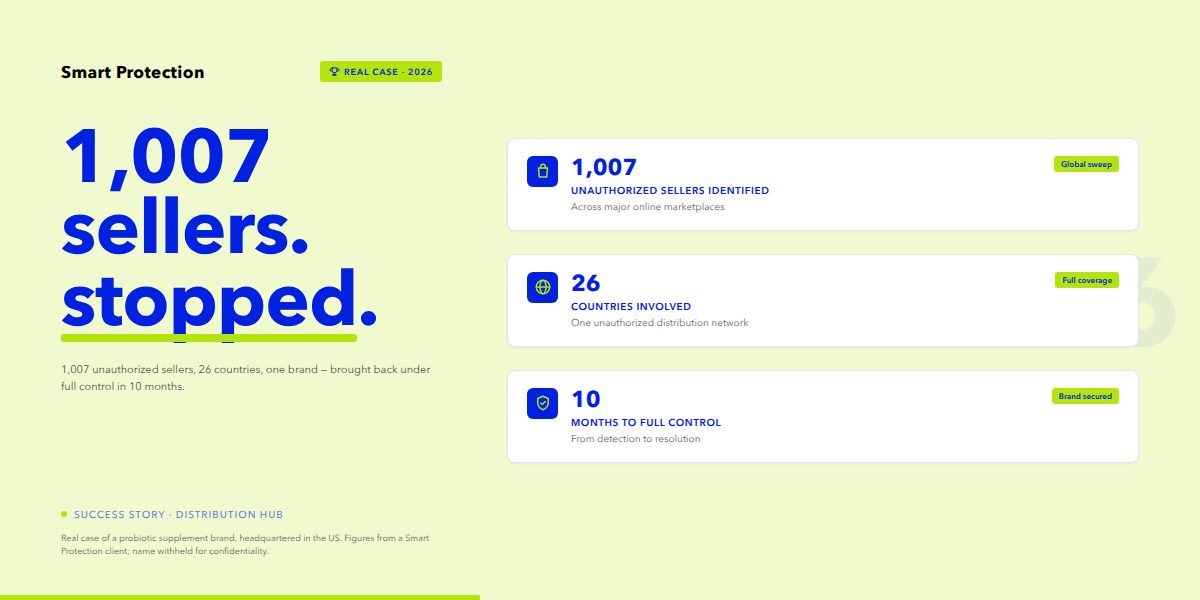
A probiotics brand removed 96.56% of its unauthorized listings in 10 months with Smart Protection. Find out how they did it.
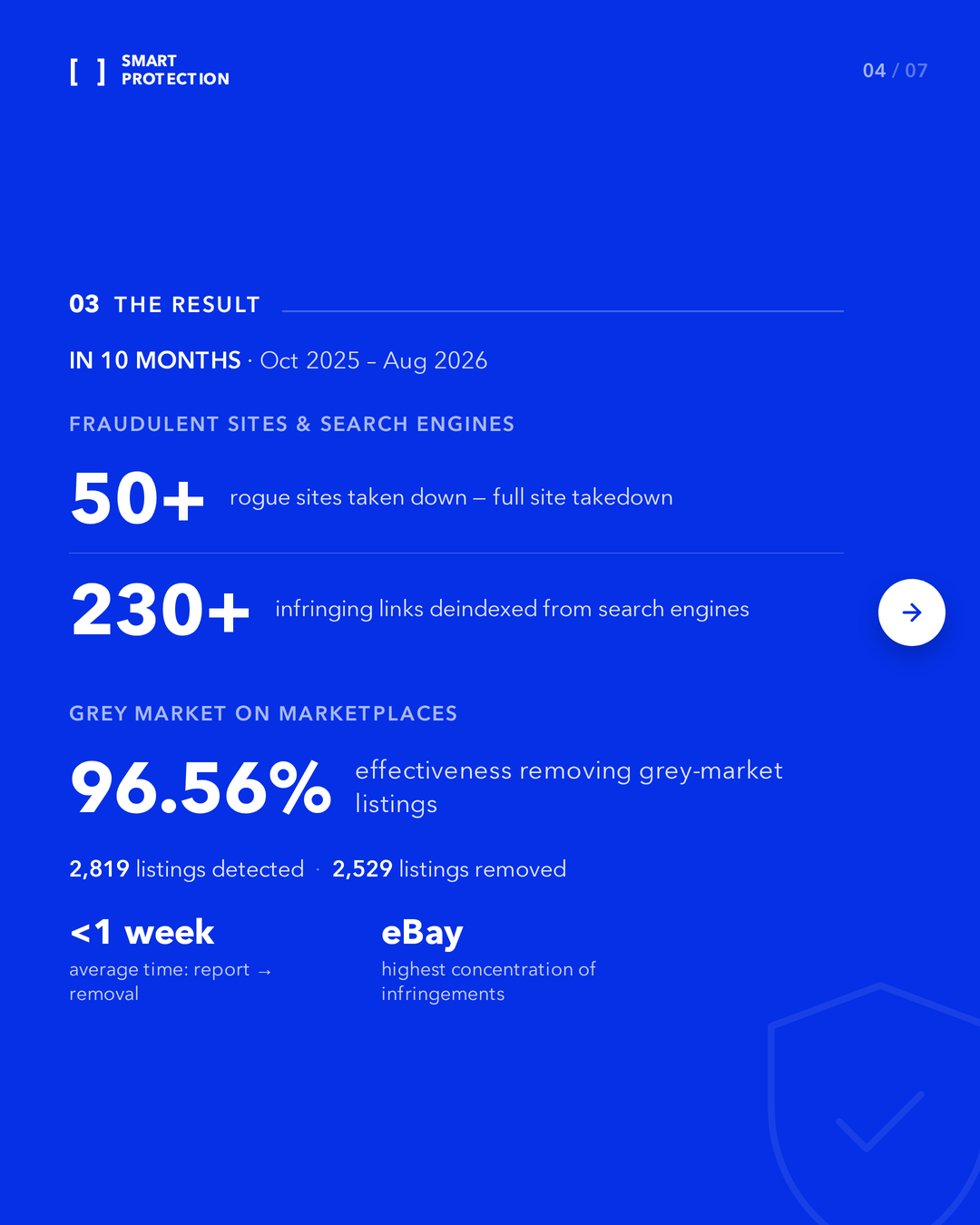
Quick answer: A US-based probiotics brand detected 2,819 unauthorized listings across 7 marketplaces, operated by 1,007 sellers in 26 countries. Working with Smart Protection, it removed 96.56% of those listings in under 10 months, dismantled over 50 fraudulent websites, and deindexed more than 230 infringing links from search engines.
Most brands discover the problem too late.
Not when the first fake website appears.
Not when the first unauthorized seller shows up.
They find out when a confused customer calls.
When conversions drop without explanation.
When someone sends them a screenshot of a site that looks exactly like theirs — but isn't.
This is the story of a US-based probiotics and wellness supplements brand that, in October 2025, decided enough was enough.
The grey market occurs when a brand's genuine products are sold outside its official distribution channels.
They're not necessarily counterfeits.
But they're not authorized either.
And that distinction matters more than it might seem.
For a probiotics or supplements brand, unauthorized distribution isn't just a commercial problem.
It's a trust problem — and potentially a public health issue.
A product stored or transported incorrectly can lose efficacy.
A customer buying through an unsupervised channel doesn't receive the brand's support or guarantee.
And if something goes wrong, the brand absorbs the consequences.
Beyond the product itself, the grey market erodes the entire commercial strategy:
In the health and wellness category, the impact is twofold: commercial and reputational.
This brand was facing a dual threat that many ecommerce teams underestimate.
First threat: fraudulent websites.
These weren't fringe pages operating in digital obscurity.
They were sites that precisely replicated the brand's visual identity — the colors, the tone, the design.
And they were reaching customers through Google Ads, Meta Ads, and organic search rankings.
Their purpose was threefold:
For a brand in the human consumption category, this isn't just a reputational risk.
It's a health risk.
Second threat: unauthorized sellers on marketplaces.
At the same time, hundreds of sellers were distributing their products without authorization on platforms like eBay — diverting purchases away from their official channels: their own website, authorized distributors, and their official Shop.App store.
Two distinct threats.
One shared outcome: loss of control over how their brand existed in the digital world.
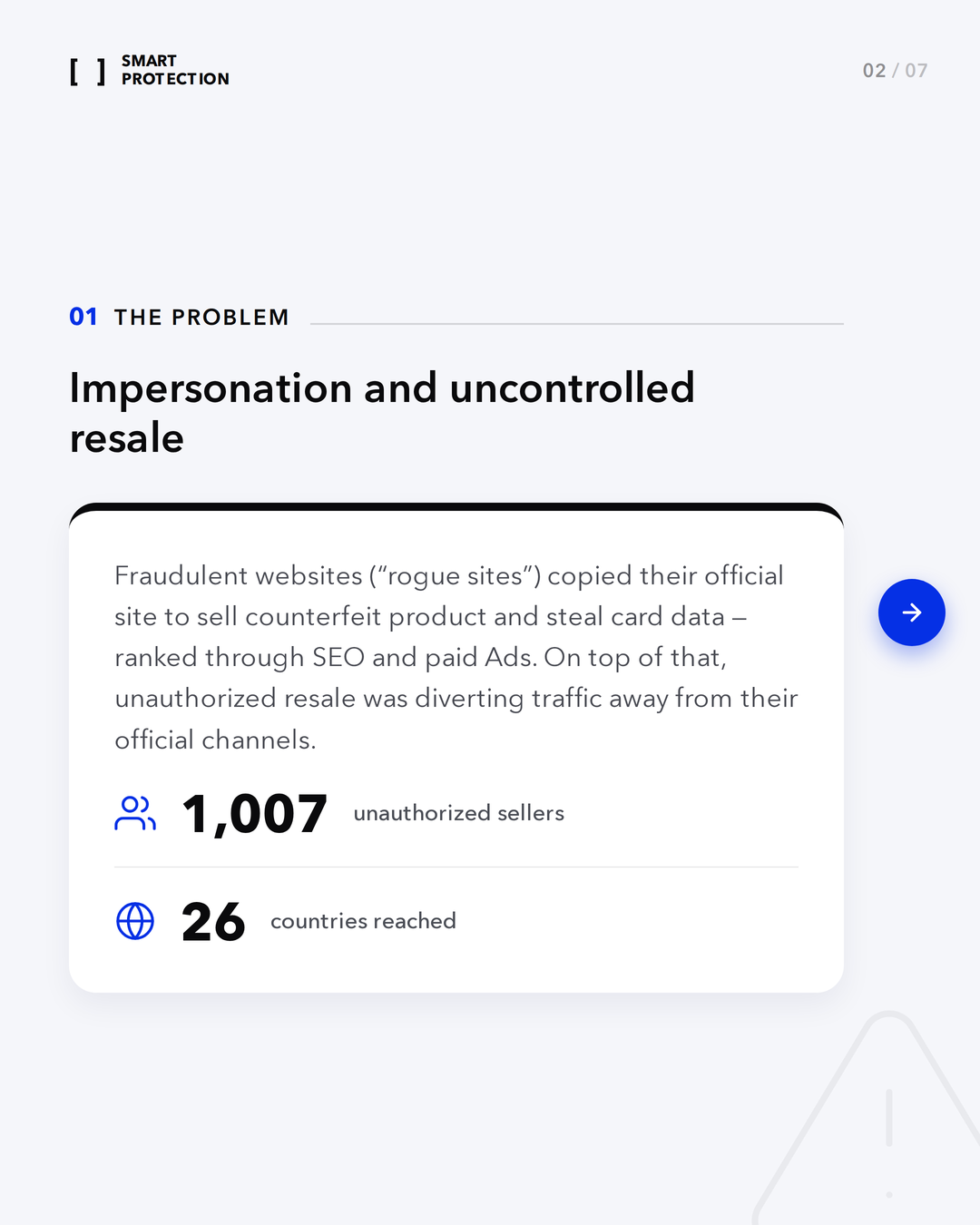
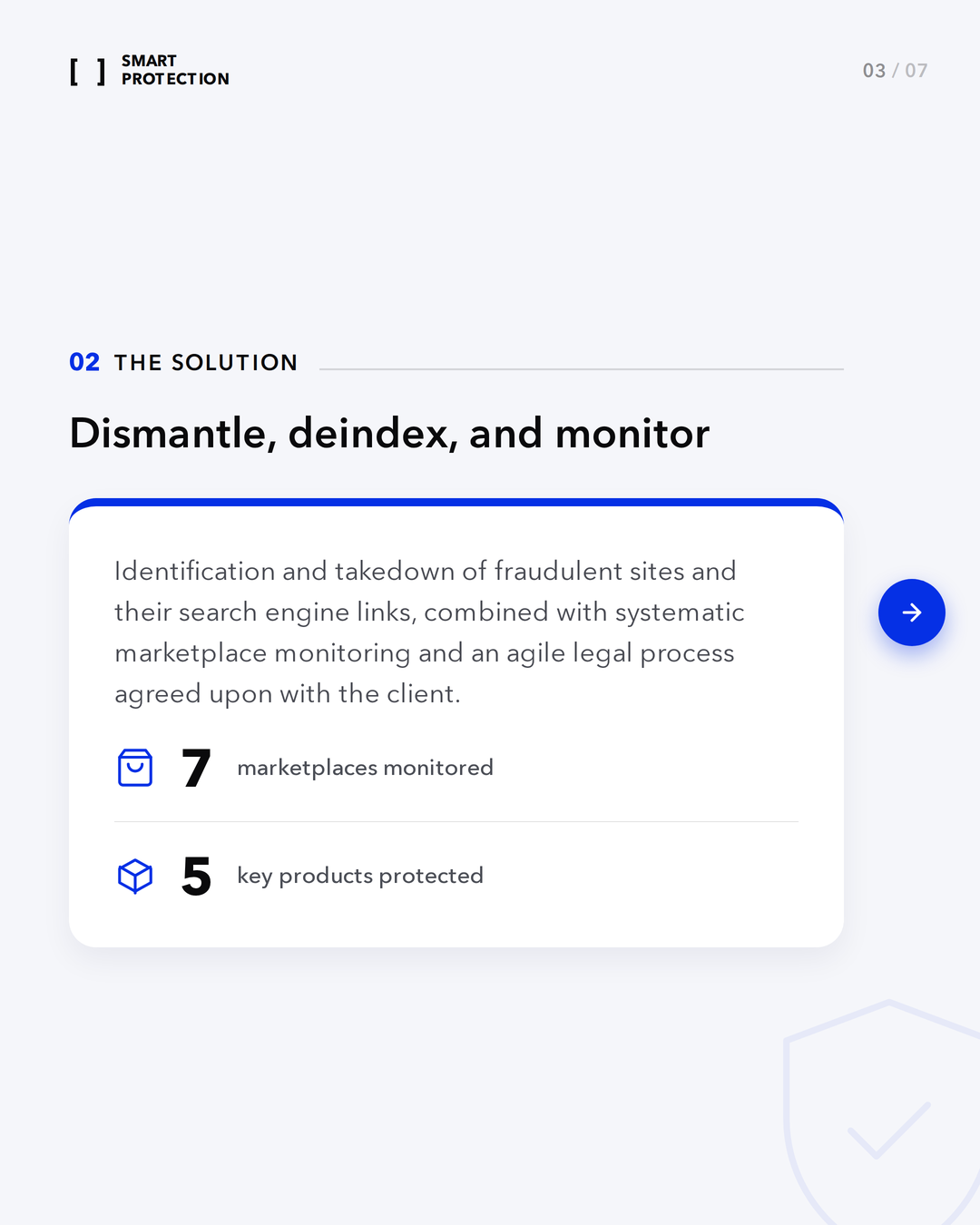
In October 2025, the brand activated Smart Protection's service to address both threats in a coordinated way.
The strategy operated across three simultaneous fronts:
Continuous marketplace monitoring.
Smart Protection implemented daily surveillance across 7 ecommerce platforms, automatically identifying unauthorized listings, off-channel sellers, and price deviations.
Detection and takedown of fraudulent websites.
The system identified sites cloning the brand's visual identity, analyzed their infrastructure, and executed removal and search engine deindexing processes.
Expert-led operational management.
Beyond the technology, Smart Protection coordinated each case with a team of specialized lawyers, analysts, and managers — ensuring every action carried proper legal backing and the right prioritization.
Between October 2025 and August 2026, the results were decisive.
On marketplaces:
The highest concentration of cases was found on eBay.
Across the web:
In under a year, the brand reclaimed control over how its products appeared — and were sold — online.
The volume of threats wasn't the core challenge.
The challenge was the ability to prioritize, manage, and remove them with speed and legal consistency.
Three factors were decisive:
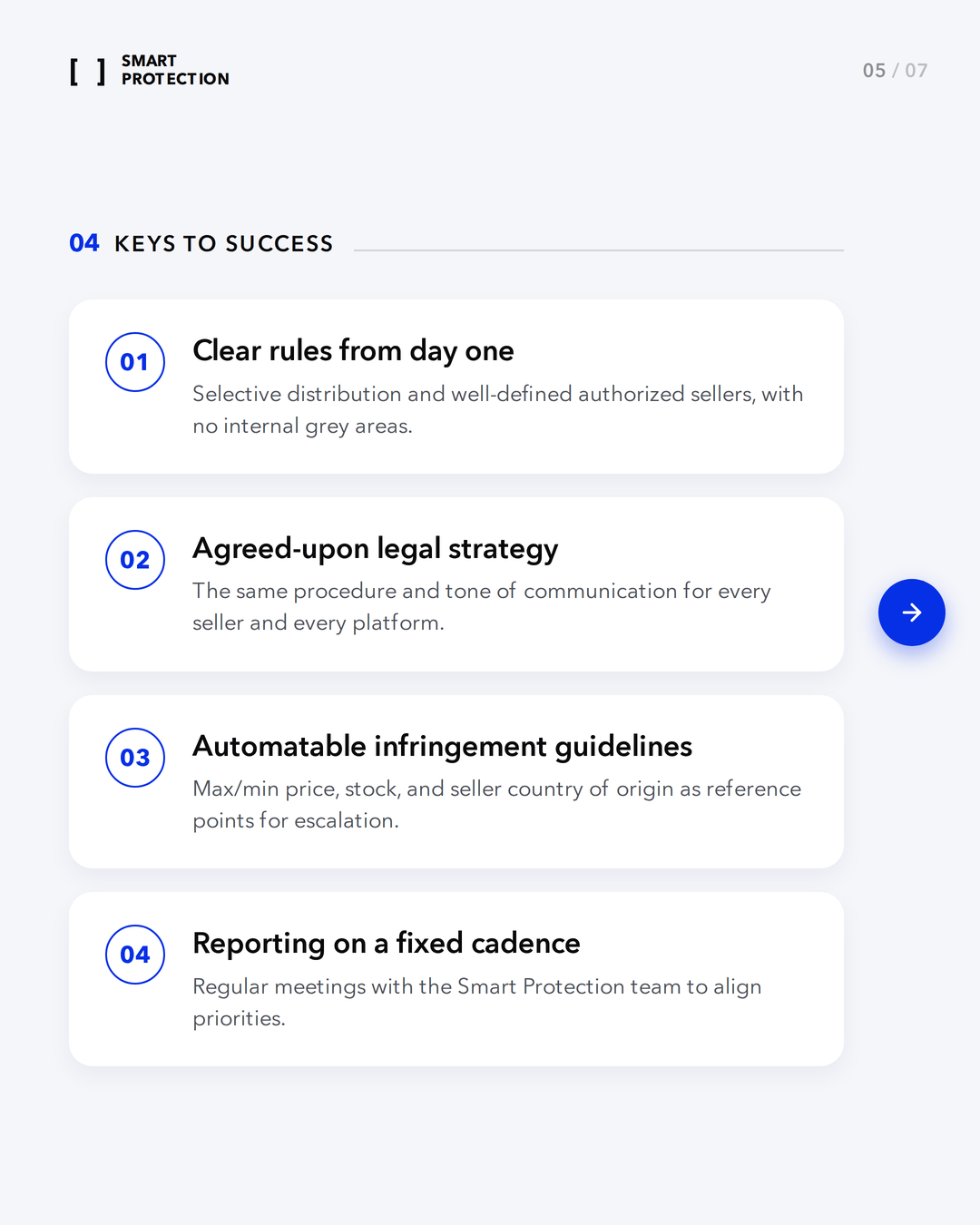
1. A solid legal framework from day one.
Before any action was taken, a clear legal foundation was established.
Without it, takedown requests stall, get rejected, or create unnecessary friction with platforms.
2. Clearly defined infringement criteria.
Not all threats carry the same commercial impact.
Precisely defining what constitutes an infringement — and what level of priority it deserves — allows teams to act where it matters most.
This included a clearly established selective distribution agreement, which served as the foundation for communications with sellers and platforms.
3. Constant alignment with digital risk experts.
The best brand protection outcomes don't come from automated monitoring alone.
They come from combining technology with specialized human judgment: lawyers, analysts, and managers who coordinate each case with strategic and operational context.
Frequent reporting also made it possible to adjust strategy in real time, prioritize by commercial impact, and document measurable results for leadership teams.
Probiotics and supplement brands operate in a higher-than-average risk environment.
These are products intended for human consumption.
That means a fake website doesn't just damage the brand's reputation.
It can compromise consumer health.
It can trigger claims, returns, trust crises, and regulatory exposure.
And consumers often can't tell the difference between a legitimate site and a fraudulent one when both look identical.
This isn't an isolated cybersecurity issue.
It's a digital trust problem.
Brands operating in the health and wellness category need to understand this as a strategic priority — not a second-tier operational task.
Every dollar invested in customer acquisition could be benefiting whoever is stealing your brand identity.
The question isn't whether this is happening in your category.
The question is whether you have enough visibility to know.
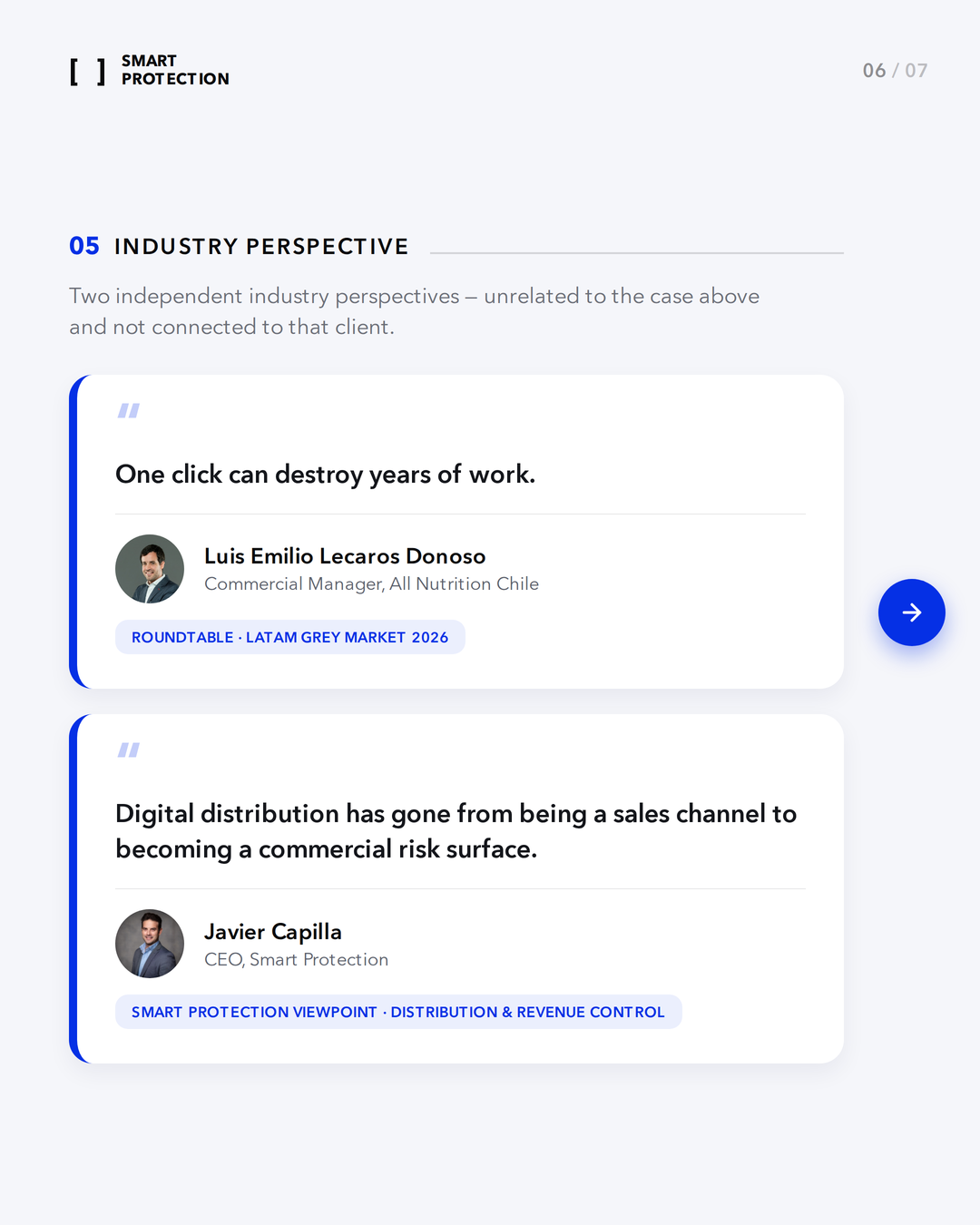
The grey market occurs when a brand's genuine products are sold through channels not authorized by the manufacturer. Unlike counterfeits, the products themselves may be authentic. The damage, however, is just as real: it erodes margins, fragments the customer experience, and breaks the integrity of the distribution network.
Unauthorized distribution diverts purchases away from official channels, pressures legitimate distributors, and distorts pricing across key marketplaces. For brands in the human consumption category, it also introduces health risk and regulatory liability.
It depends on the platform, the legal framework in place, and the depth of the relationship with each marketplace. With Smart Protection, the probiotics brand achieved an average removal time of under one week from detection.
High-volume general marketplaces like eBay concentrate the largest number of unauthorized sellers. However, the risk exists across multiple platforms simultaneously. In this brand's case, threats were detected across 7 different marketplaces and 26 countries.
Three elements are essential: a solid legal framework to support removal actions, clear infringement criteria that allow prioritization by commercial impact, and access to digital risk experts who combine technology with strategic judgment. Without these pillars, monitoring efforts rarely translate into measurable results.
If your brand operates in ecommerce and you don't yet have clear visibility into what's happening across marketplaces, search engines, and the broader web ecosystem — the problem likely already exists.
Our digital risk experts can help you understand the true scope of your brand's exposure and design a protection strategy that generates measurable results.
Want the same results? Let's talk.
.png)
.png)


