
Thank you! Your submission has been received. We will get in touch with you soon.
Back to site
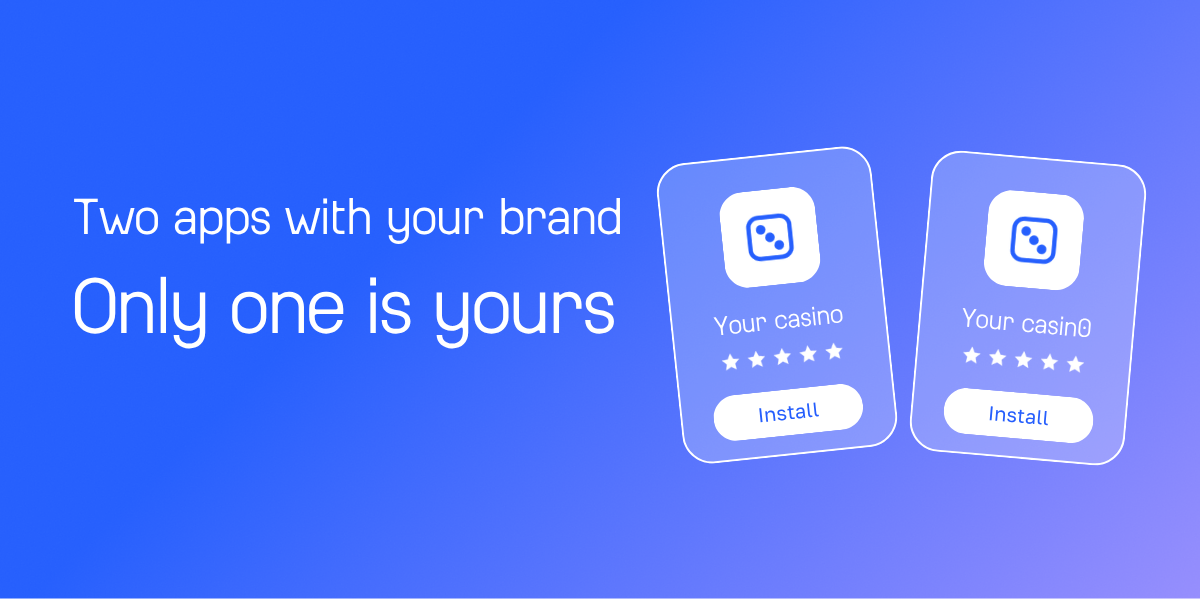
Fake casino apps, sites posing as app stores and ads using your brand can show up when players search for your app. What to check and how to act.
When a player searches for “[your brand] app” or “download [your brand]”, they are looking for your casino, not someone else’s. That search comes from demand the operator has worked hard to build. But the result they click doesn’t always lead to an official channel. It could be a Google Play listing you never published, a site posing as an app store, or an ad presenting a download as official.
In March 2026, the European Gaming and Betting Association (EGBA) warned the European Commission about a range of threats facing online gambling operators. Among them were fraudulent apps on Google Play and the App Store, domains imitating legitimate brands, and misleading ads, all of which can resurface shortly after being taken down.
A fake casino app is more than a logo on someone else’s app. It can mean branded clicks that never reach the official site, sign-ups on a third-party destination, and bad experiences that players blame on the casino. Knowing where the impersonation appears, what evidence proves it and where to report it helps protect both the operator’s identity and the traffic its brand generates.
The first place most teams check is the app store. On Google Play or the App Store, every app has a listing, the page showing its name, icon, developer, screenshots and description. These are the elements users rely on to decide whether to install it, which is exactly why they can also suggest a connection to a brand that doesn’t exist.
Not every fake install goes through an official store. In March 2026, Malwarebytes documented FriendlyDealer, a campaign running across at least 1,500 domains that mimicked Google Play and App Store listings. The pages showed fake reviews and adapted their look to the visitor’s device. Tapping “Install” made the browser add a progressive web app (PWA) with its own icon, which led to casino offers through affiliate links. Not all of those pages impersonated operators, but the mechanism is clear. What looks like an official app store can be hosted on an independent website.
That changes what you need to watch in search. A page like that is a website, so it can be indexed, appear in search results or receive ad traffic. If it uses the casino’s identity, action is taken against the domain or the hosted content, even if there’s no app on Google Play or the App Store. Bear in mind, though, that acting against a site that distributes a PWA can cut off access, but it won’t remove an icon already installed on the player’s phone.
The same goes for ads. Google Ads’ Trademarks policy doesn’t restrict the use of trademarks as keywords, so a third party can bid on your casino’s name. What it does restrict is using them in a confusing or misleading way in the ad itself. If a campaign uses your name, your logo or a supposedly official promotion to drive players to a fake download, the ad is also part of the impersonation.
The point isn’t just to find a suspicious app, but to follow the path that takes the player from the search to that app.

A fake app doesn’t need to outrank your site to cause damage. It just needs to take up space in the results for a branded search. And when what’s being offered is a download, the effects can last well beyond the click.
A fake page can drop out of search results, but if the player has installed the app or added a web app to their phone, they keep a shortcut with your brand on it. As long as the destination stays live, they can return without searching again or visiting the official site.
Affected players may post complaints or reviews blaming the casino for an app that isn’t theirs. That content can also show up in searches like “[brand] reviews” and put off people who haven’t played yet. As we explained in Casino SEO and brand protection, a bad experience on a fake destination can end up being attributed to the legitimate operator.
Francisco Vega, Head of Customer Success at Smart Protection, puts it this way:
“The worst thing that can happen is having players and customers upset by a scam, and a response that seems non-existent or slow because the threats weren’t on your radar.”
Impersonation doesn’t require copying an existing app. Using an operator’s name and visual identity to pass off a service it has never offered as official can be enough.
In May 2025, the Caja Popular de Ahorros de Tucumán, the gambling regulator in that Argentine province, issued a warning about an app claiming to be linked to Casino de Tucumán. It used the casino’s name and, according to industry press, its logos and graphic elements. At the time, the casino had no official app for online betting.
The regulator urged users not to download the app or enter any personal or banking details, and reminded them which channels were official.
The case shows that not having an official app doesn’t stop a third party from posing as its owner. If anything, a page or listing claiming to be that app can exploit the gap to create confusion. And if it also appears in branded searches, the impersonation competes for the casino’s traffic too.
The public information does have its limits, though. It doesn’t say where the app was hosted, who published it, how many people installed it or whether it was ever taken down. Those are exactly the questions an operator needs to answer in a similar situation. It has to locate the app or its distribution page, identify the publisher, document the brand assets being used and check what the app asks the player for. Only then can it decide what kind of complaint to file and with whom.
A match with the casino’s name doesn’t prove an infringement on its own. Neither does an unknown developer or an app that links to an external website. To determine whether something is falsely presenting itself as official, it’s worth checking four elements.
A different developer doesn’t always mean fraud. A provider may publish an app on the operator’s behalf, and an authorised affiliate may use its brand within the terms agreed, as we covered in who’s intercepting your casino’s players. Before filing a complaint, check whether any authorisation or contractual relationship exists.
The brand can appear outside the title. Google Play’s impersonation policy also covers icons, descriptions and other app elements. An app that doesn’t include the casino’s name in its title can still create a false connection through its screenshots or content.
The category isn’t conclusive either. An app may present itself as a casual or rewards game rather than a real-money casino. In September 2026, Bitdefender found thousands of potentially deceptive apps in Google Play’s Early Access programme, including casino-style games. Reviewing the casino category alone can miss part of the problem.
These checks are part of app impersonation protection, where developer authenticity, history and brand assets help assess which detections need action. What matters is telling the difference between finding a match and gathering enough evidence to support a takedown request.
When impersonation also shows up on download pages or in ads, different actions may be needed. Domain management addresses pages impersonating the operator, while ads control tackles advertising that misuses its identity. In Google Ads, trademark complaints must identify specific advertisers by their URLs, so documenting each ad is part of the evidence.
Reviewing branded searches regularly helps catch this kind of impersonation before it leads to complaints. These are the points worth covering.
This review complements the one we outlined for parasite SEO in online gambling, which focuses on third-party sites ranking on your brand.
Recurrence is one of the challenges EGBA highlighted in its March 2026 statement. Its members noted that certain fraudulent apps and domains reappeared after being taken down.
A new app can use a different name, a different developer or a different distribution page. It can also reuse elements from earlier listings, such as images, copy, promotions or destinations. Those elements help investigate possible links between incidents, but they don’t automatically prove the same party is behind them. That’s why it’s worth keeping the evidence from every case.
It’s also important to keep your metrics separate. Detected apps, confirmed infringements, submitted requests and successful takedowns are not the same thing. Tracking reappearances as well, and checking whether removed results are filled again by other listings or domains, tells you whether an action has resolved the incident or whether your branded searches are still exposed.

Monitoring should prioritise whatever is most likely to confuse players, such as results posing as official channels, asking for personal details or leading to sign-ups and deposits outside the operator’s control.
It can affect the traffic that comes from branded searches. If an unofficial listing, site or ad picks up clicks on queries like “[brand] app”, those players never reach the official site, even if your ranking doesn’t change.
Yes, as long as there are grounds to file a complaint for impersonation or rights infringement. Not having an official app doesn’t stop a third party from using the operator’s identity to falsely present itself as authorised.
It depends on who holds the rights to that game and how its identity is being used. In many cases the content provider can step in, but it’s worth reviewing the licences and any impact on the operator’s brand before deciding who should file the complaint.
Your site can rank first and still share the results with download pages, domains or ads using your identity.
It starts with knowing what players see in those searches today: which unofficial results appear, which ones present themselves as the casino’s app or site, and where to report them. After that, every takedown needs to be verified and new appearances kept under watch.
What shows up today when players search for your casino? Request your free brand exposure analysis in search


